ESG Risk Management

Risk Metrics

ESG risk at Hayleys Fabric is tracked the same way any operational risk would be: through defined metrics, not general assurances. We monitor a set of indicators across environmental, social and governance categories, covering areas such as energy and water intensity, safety incident rates, chemical compliance status, and supplier certification coverage, so that risk exposure is visible in numbers rather than only in narrative reporting.
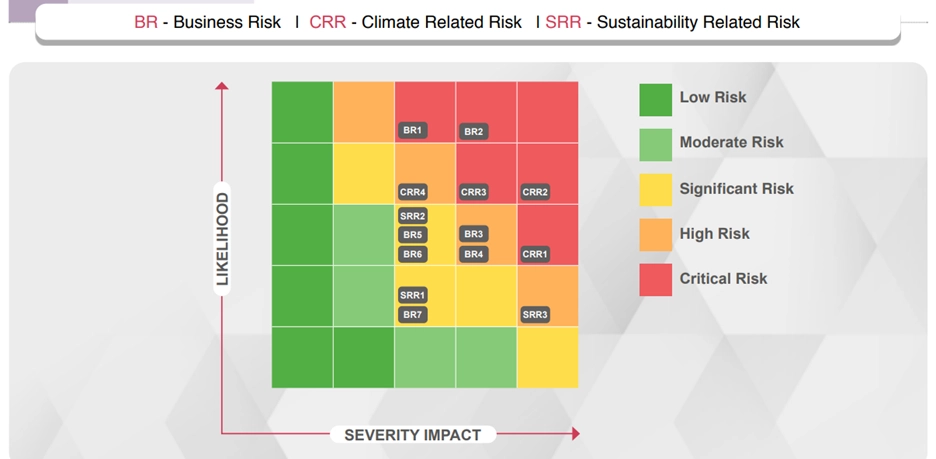
These metrics feed directly into our ESG Steering Committee’s oversight process, flagging where performance is drifting from target early enough to act rather than surfacing only at year-end reporting. Where a metric moves outside an acceptable range, it triggers a review at the working-group level, the same groups responsible for implementation in each operational area, before it becomes a reportable risk rather than after.
Tracking risk this way also makes trend-spotting possible. A single data point rarely tells you much on its own, but the same metric tracked consistently over several reporting cycles can reveal whether a risk is stabilising, worsening, or responding to a corrective measure already put in place, information that’s far more useful to decision-makers than a snapshot taken once a year.

Material Topics

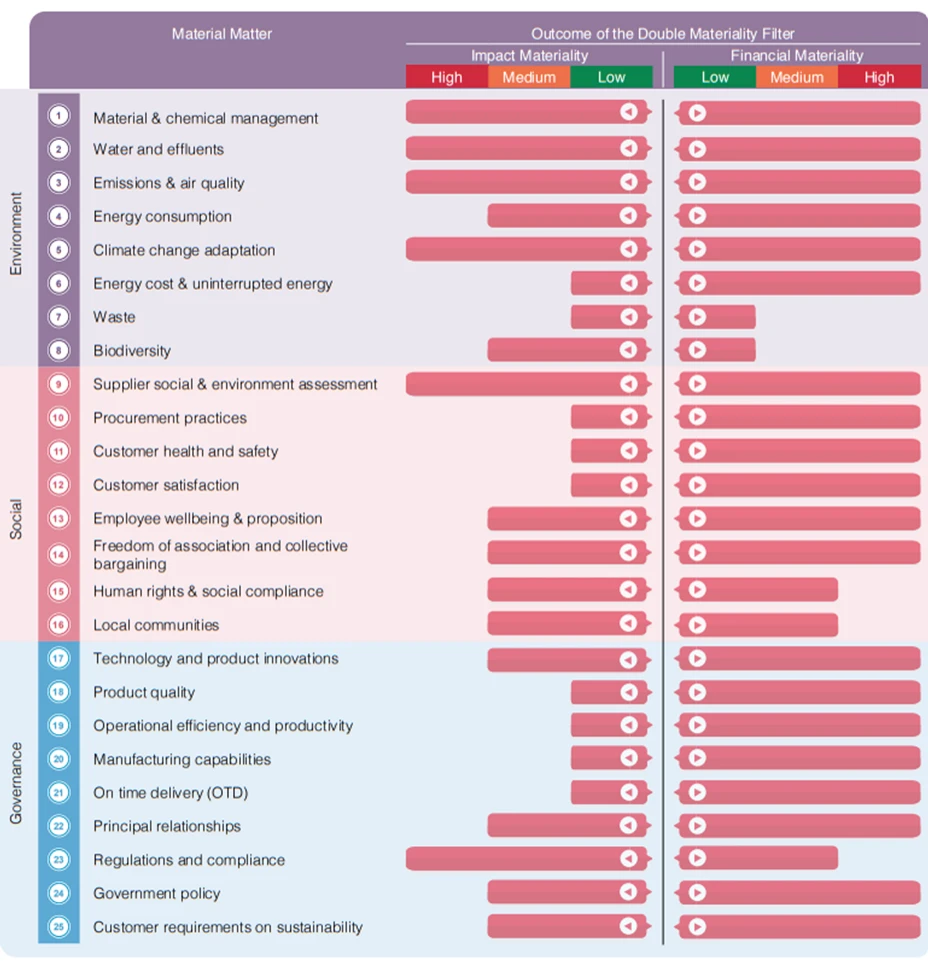
At Hayleys Fabric Group, materiality guides our focus on the environmental, social and economic factors that matter most to long-term value creation. As a manufacturing business operating across multiple regulatory and market contexts, we integrate these priorities directly into strategic planning and risk management, rather than treating materiality as a separate reporting exercise.
Our annual Materiality Assessment follows the Hayleys Group’s Double Materiality approach, evaluating each topic from two directions:
  • Impact materiality: how our operations affect society and the environment.
  • Financial materiality: the risks and opportunities each topic presents to the business.
Assessing both sides keeps the process honest in both directions: a topic can’t be dismissed just because it isn’t yet a financial risk, and it can’t be prioritised purely because it makes for a good sustainability narrative if it carries limited financial relevance. That double lens is what keeps our sustainability strategy relevant, transparent and responsive to what stakeholders, from investors to brand partners, are actually asking about.

Risk Metrics and Material Topics work as two sides of the same process: materiality tells us which issues matter most, and risk metrics tell us how we’re actually performing against them. Running both together, rather than treating materiality as a once-a-year exercise disconnected from day-to-day monitoring, is what keeps our ESG risk management grounded in current data rather than a static assessment that goes stale within months of being published.